
Landslide at Stonehaven - with polystyrene clasts !
What are landslides ?
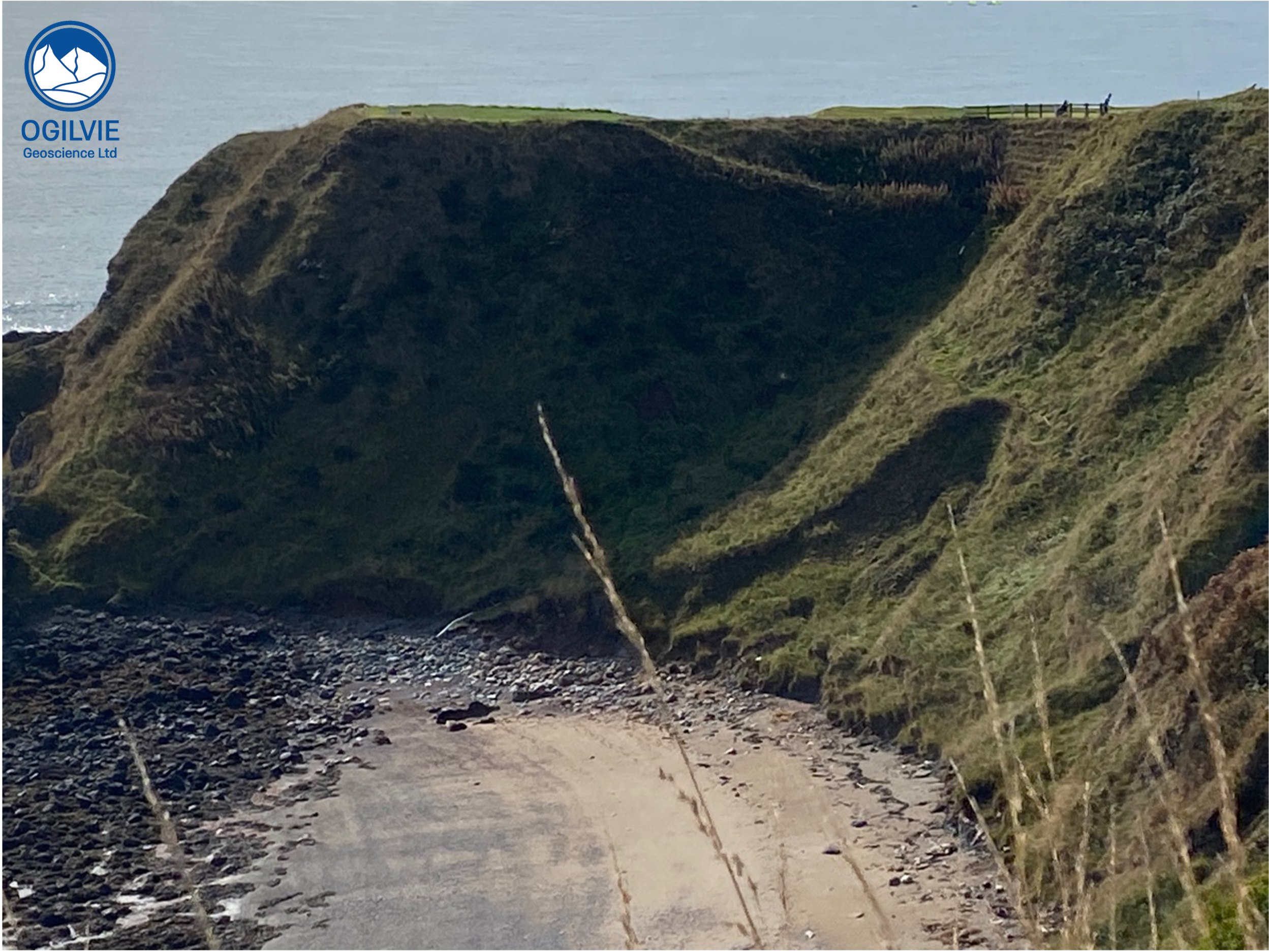
Landslides on the hillside at the southern end of Craigeven Bay, Stonehaven
Landslides are a very common features of hillslopes where masses of rock or soil moves down slope - but they can be a problem as cause slope instability. Usually they can be triggered by rainfall saturating the ground but earthquakes can also shake the ground resulting in landslides.
They often have a curved (amphitheatre-like) profile as we can see with this obvious landslide on the right hand side. This occurs on a hillside at the southern end of Craigeven Bay, Stonehaven, NE Scotland.
Just to the left hand side of this landslide (and above the plastic outflow pipe) we have the line of the Highland Boundary Fault which can be followed from the pipe upwards along the gully to the golf party at the top. This gully is also the site of a present day landslide - water has gathered in this gully and as it flows down slope and saturates the ground, the soil moves.
Landslides are also found in the rock record, often called paleo-landslides.
What does this landslide material look like ?
Various sizes of clasts, some rounded and others a bit angular. There is even some pieces of polystyrene (red arrow below). Some of the bigger clasts (more like cobbles or boulders) are a golden yellow coloured carbonate rock which appears to be derived from the highland boundary fault zone itself. Held together by a muddy and sticky matrix - mainly a red colour but with streaks of grey through it. It can be prodded by your finger or a pencil. I took a small piece home with me and by the morning it was rock solid (room temperature around 20 C) so it wouldn’t take much to turn this into a rock mass.
I wonder what future generations of geologists would make of the polystyrene !
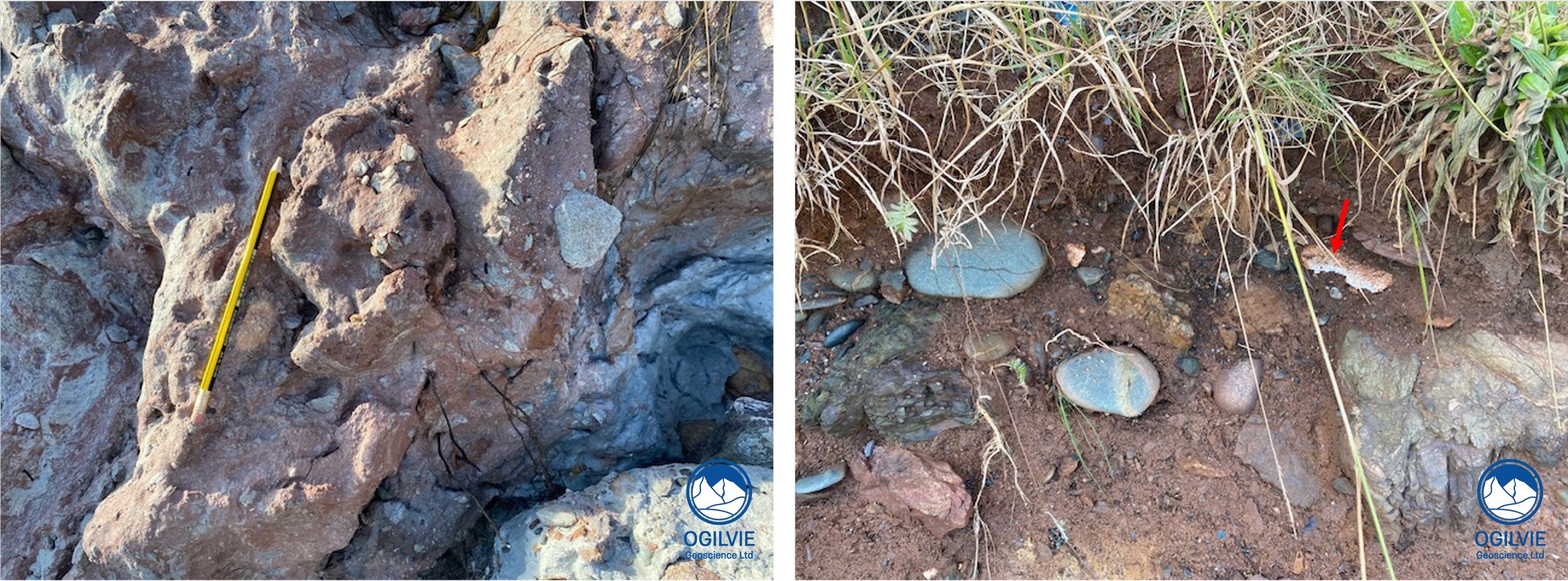
Muddy deposit at base of the landslide next to the outflow pipe; with various clasts (sizes and shapes). On the right a further view of the deposit with a sticky mud matrix and various clasts including a piece of polystyrene.
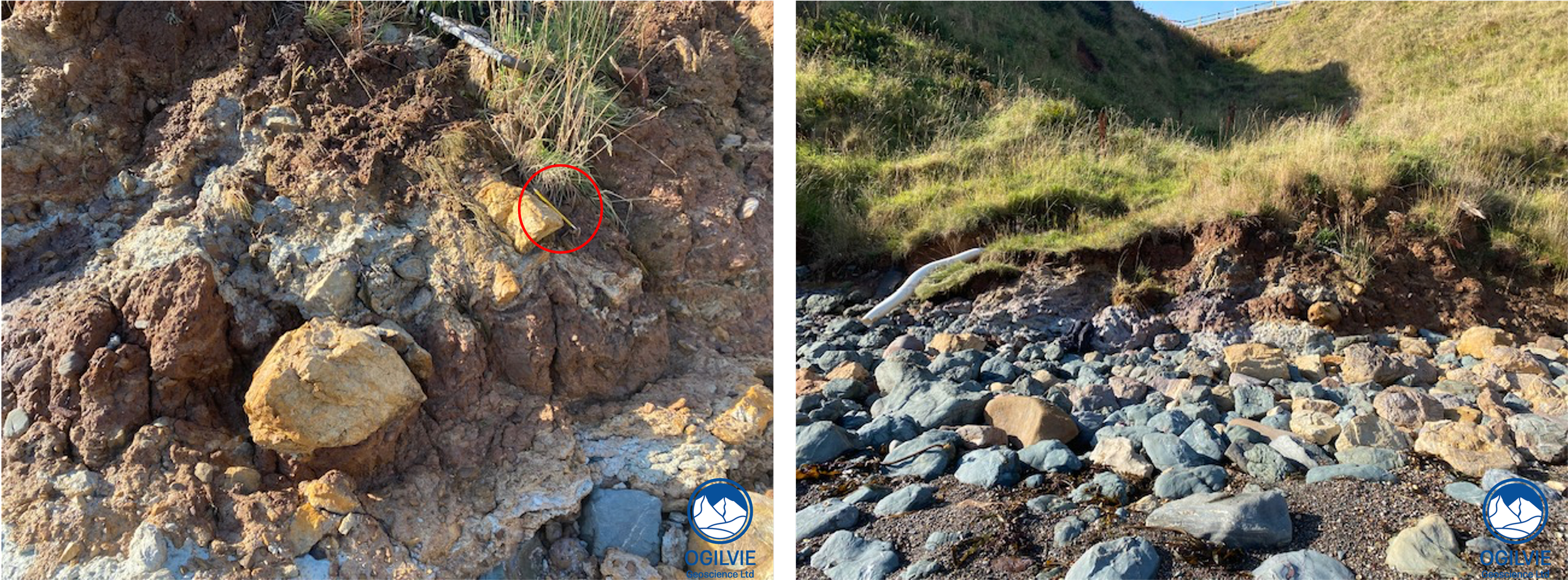
Blocks of carbonate (yellow-brown) incorporated into the landslide deposit and on the right are boulders of the carbonate plus the greenish serpentinite which pick out the line of the Highland Boundary Fault