
Structural Features at Auchmithie, E Scotland
Where is Auchmithie ?
On Scotland’s east coast a bit more than half way between Aberdeen and Dundee. You can park in the village and take the short (10 mins) walk down to the centre of the beach.
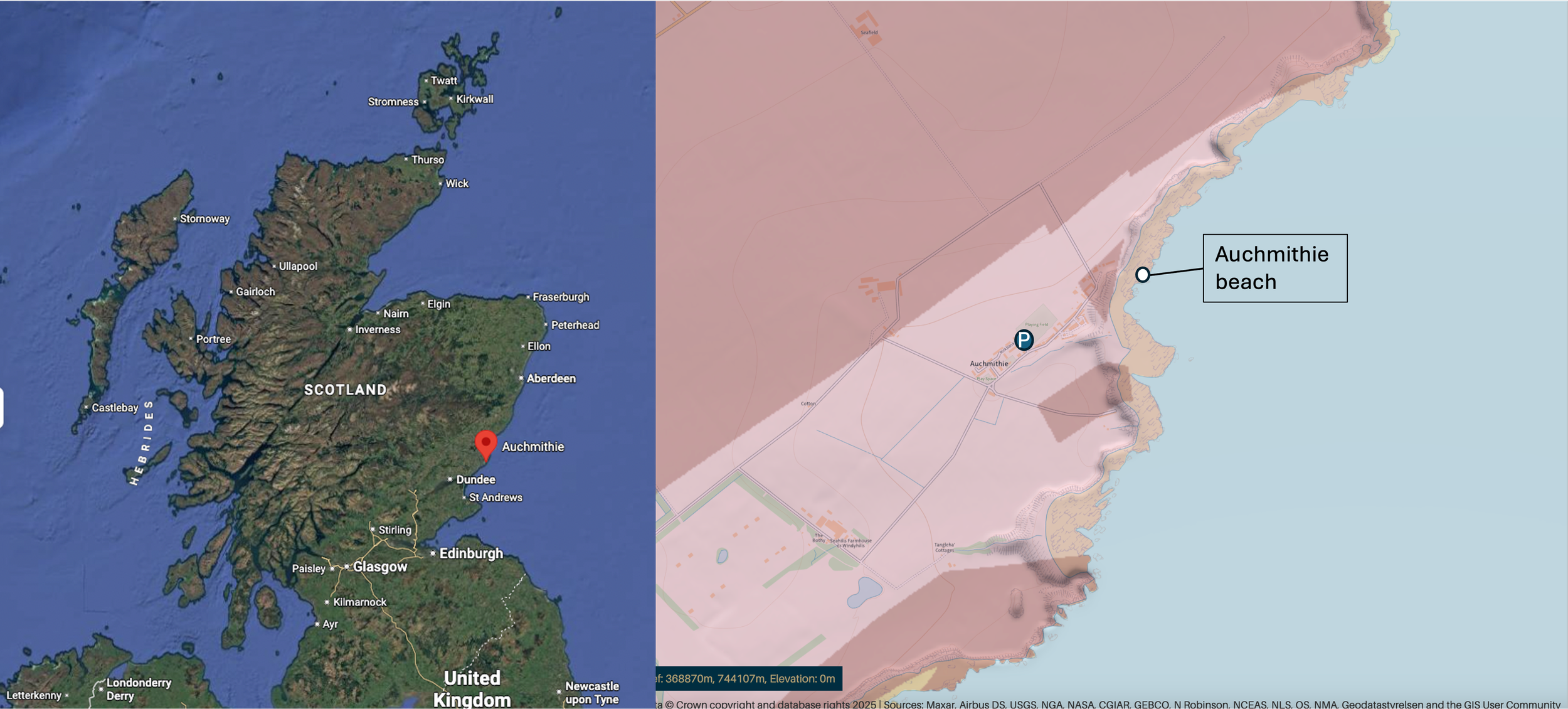
Location of Auchmithie on Scotland’s E coast (Google maps) and (right) geological map of the beach and surrounding area.
What is there to see at Auchmithie ?
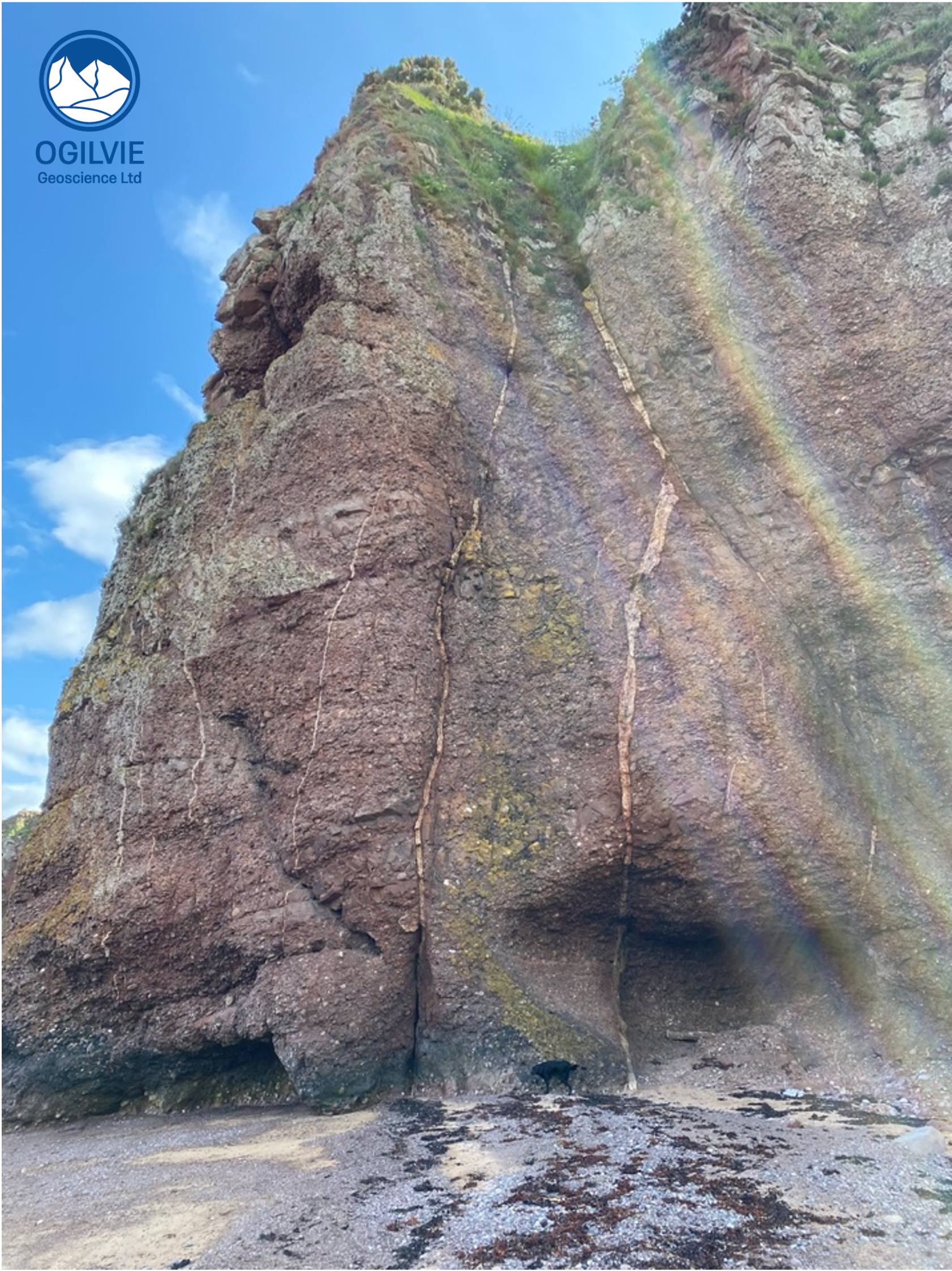
Steep vertical faults on a cliff section of conglomerate - the white fill is baryte. Black dog for scale.
Spectacular pebble beach where there are is the opportunity to see and perhaps collect some of the pebbles that are representative of local beaches. Most of these pebbles have come from the surrounding conglomerate outcrops of Lower Devonian age. Red and yellow jasper is common.
Many of millions of years later the conglomerates and (interbedded) sandstones have been faulted and fractured. The most striking faults are present on the cliff section just landward of the harbour (facing south). The faults here are very steep and vertical in places (opposite). Because of this it is likely that these are strike slip faults or at least have had a large amount of movement in the horizontal (strike) direction.
What is the white coloured fill in the faults ?
This is a mineral called barytes. Barytes often feels very heavy in the hand so if you can find a sample loose on the beach, try picking it up and you’ll see what I mean. As we can see below, sometimes the baryte fills the fracture completely but in other places we see some sandy fill in it’s centre.
Barytes is commonly mined for use as a weighting agent for drilling mud for North Sea wells - as it’s heavy ! Most of it comes from Foss near Aberfeldy. However, it is quite local in it’s distribution here (in faults and fractures) and is unlikely been mined in this area. My understanding is that the British Geological Survey are currently sampling the baryte to understand more about its origin.
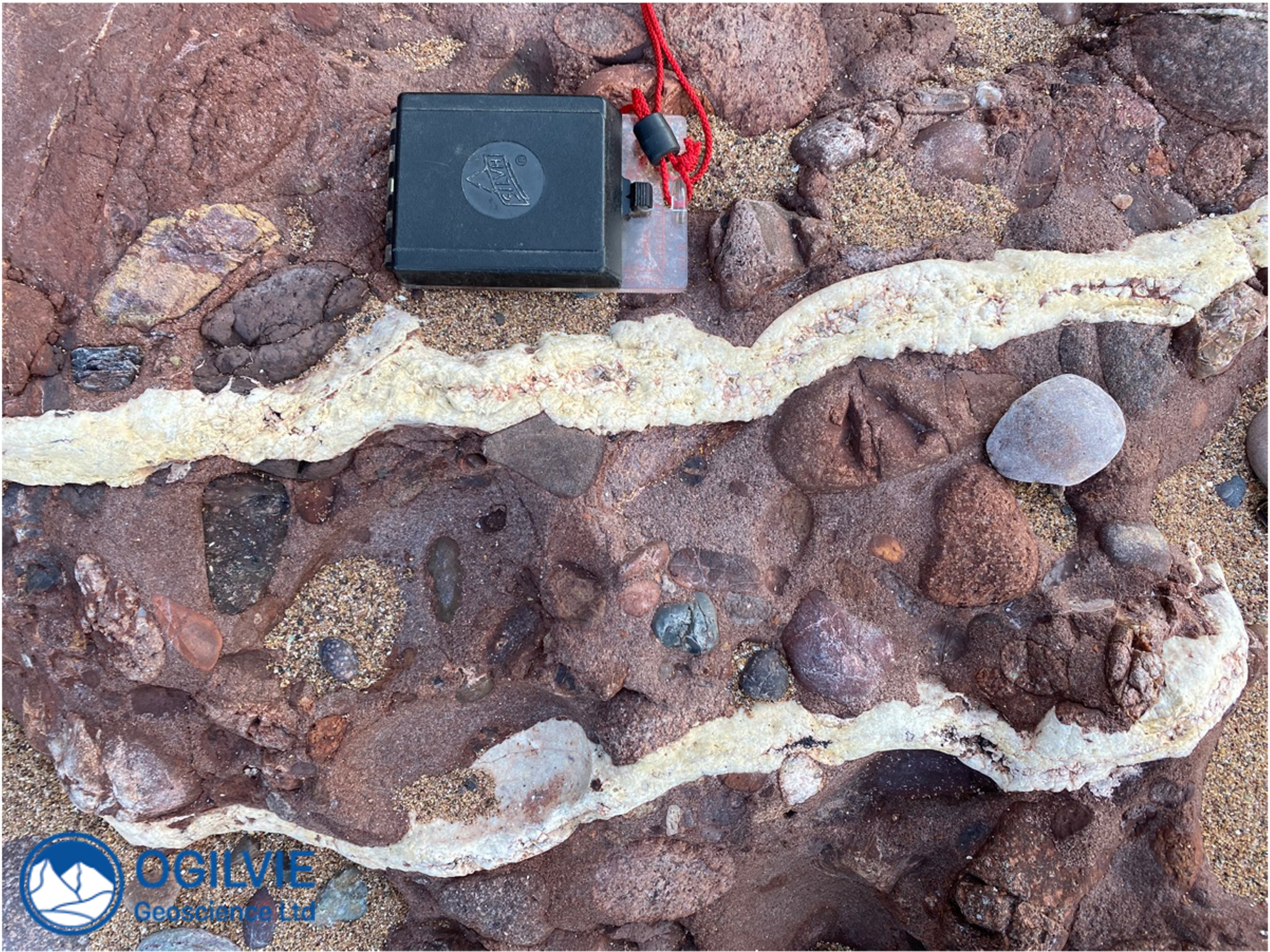
Looking down on small faults filled with barytes in an outcrop of conglomerate on Auchmithie beach
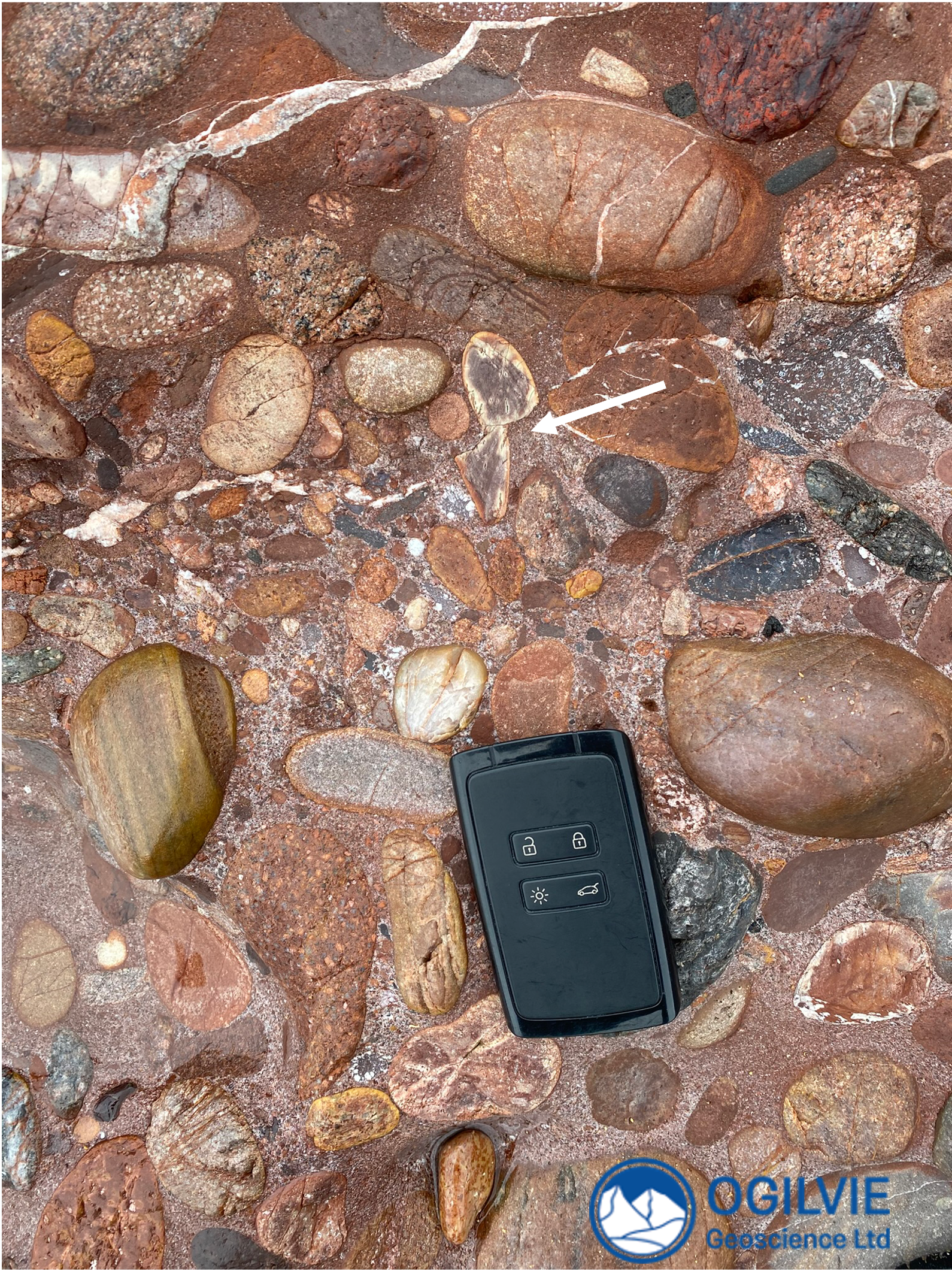
White arrow points at a fractured pebble in the Auchmithie conglomerate. The darker pebble to the right of it has also been displaced.
Fractured pebbles
Another thing to look out for are that many of the pebbles in the conglomerate appear to be fractured and the fractures tend to run in the same direction. This tell us that the fracturing event happened after the pebbles were incorporated into the conglomerate. This particular fracture also has a baryte fill - therefore we have baryte fill at a range of scales.
In other places, the fractures go around (known as crack pinning) the pebbles and not through them.
Sedimentary injection structures
On the beach outcrops, it is possible to find injection structures - these injectites contain a mix of sand and small pebbles. They have been forced under pressure into the fractures within the conglomerate. The outcrop below contains a network of these features (white arrows).
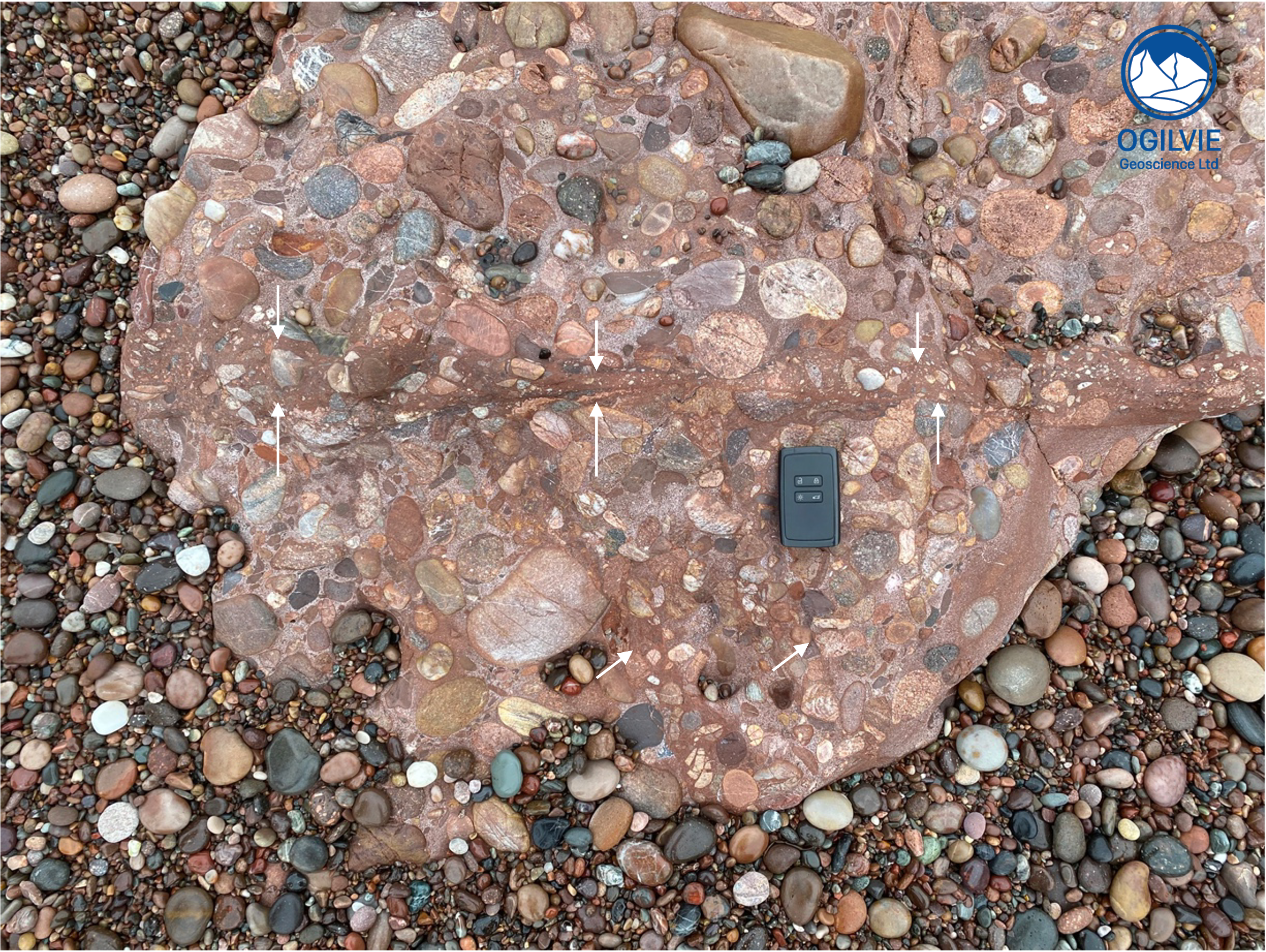
Network of sedimentary injection structures in the Auchmithie conglomerate
Mechanical Stratigraphy
Some rock types will contain more fractures than others. This is called mechanical stratigraphy. Also, thin beds of sedimentary rocks tend to contain more fractures than thinner beds. Below, on a cliff section north of the Auchmithie beach we can see alternating sandstone and conglomerate beds. The sandstone is more fractured than the conglomerate but there are groups of fractures that tend to cut through both rock types - these are called fracture swarms and can be picked out by swathes of vegetation which clearly enjoy the steady flow of water through these fractures.
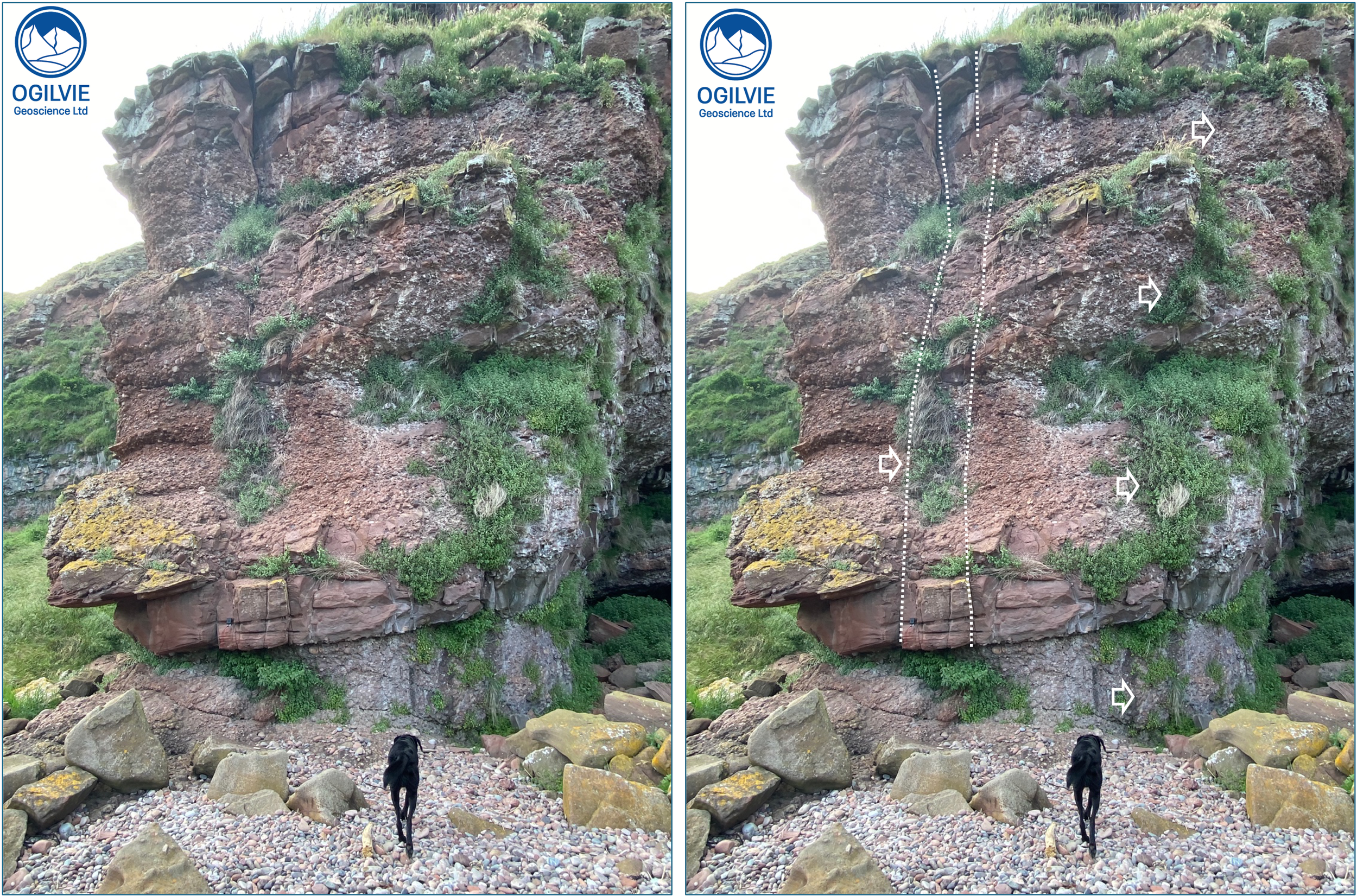
Fracture swarms (arrows) that cut through both the conglomerate and the sandstones although the sandstones have more background (diffuse) fractures