
Molybdenum in Quartz Vein, Souter Head, Aberdeenshire
What is it ?
An orogenic (Grampian) sub-volcanic complex with critical mineral outcrop (molybdenum).
Where is it ?
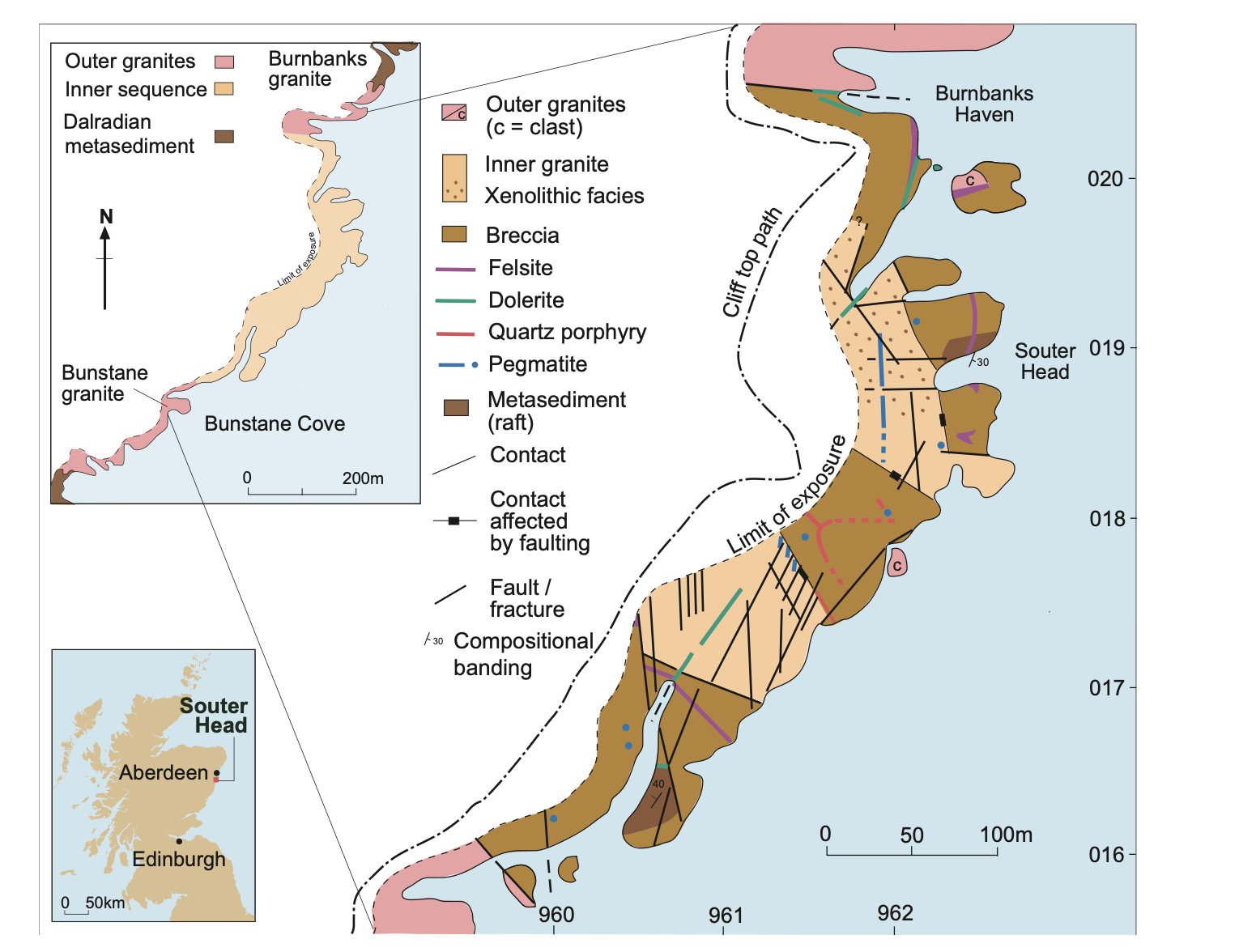
The molybdenum is found within a quartz vein found within an igneous complex which has intruded into the Grampian group (From ref 1).
About 5 minutes drive south of Altens industrial estate on the southern edge of the City of Aberdeen (on Scotland’s East coast). The parking is on the inland side of the road just next to Burnside village (NJ957019), north of the village of Cove. The car park has a red metal arch entrance, it’s free and has plenty spaces. The section is a 5 - 10 minute walk to Burnbanks Haven at it’s northern extent (opposite).
The Geology
Igneous rocks have been intruded into the country rocks of Dalradian schists and various metasediments. The schist usually contains large and quite sparkly (in the sun) and flaky micas, both muscovite (lighter one) and biotite (darker one). This likely occurred during the early stages of the Caledonian Orogeny - a phase known in the UK asthe Grampian Orogeny [2]. The emplacement of this complex is likely a similar age to other granitic intrusions and also to younger more basic bodies in NE Scotland.
Between the outer granites (pink opp.) there are inner granites and also breccia outcrops. The breccia of granite and Dalradian schist clasts, caused by overpressured magmatic fluids breaking apart the rocks. As the fluid pressure reduced, mineral cements were precipitated out between the clasts, holding them together.
There are many intrusive features and veins in the area. Dolerite, felsite and quartz porphyry are common, having intruded into pre-existing cracks. Quartz veins also exist along fractures that have likely formed during relaxation (extension) phases in between the main compressive events of the lengthy Caledonian Orogeny.
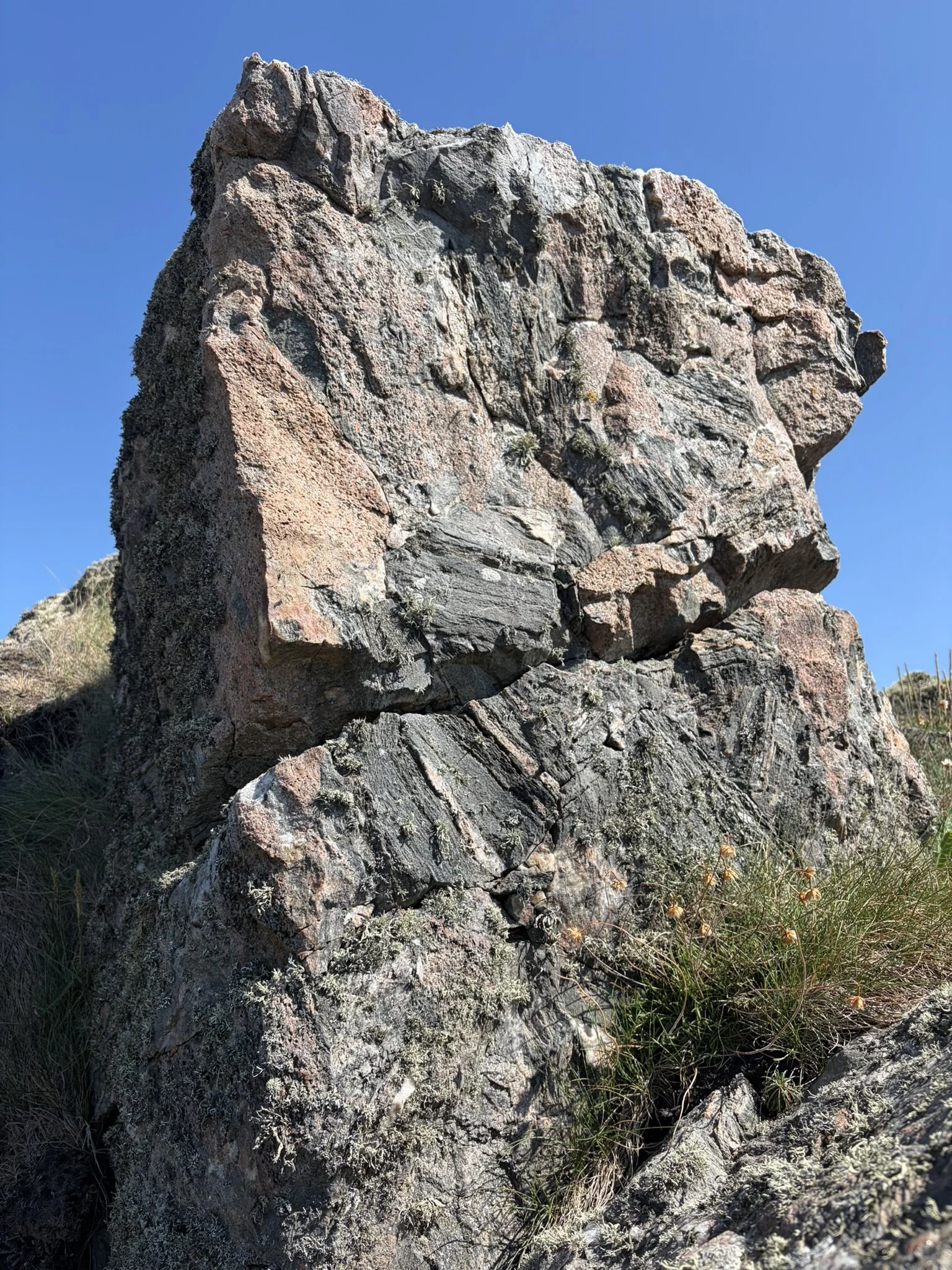
Clean face of the breccia showing foliated metamorphic rock fragments and fragments of pink granite - from just S of Burnbanks Haven on the map above. Outcrop about 1.5 m tall.
Molybdenum
The localised occurrence of this metallic looking, platy mineral in vein form is one of the highlights of a trip to Souter Head. It has quite a greasy feel and is not as bright and shiny as the muscovite micas in the surrounding schists.
Here it occurs in a much larger and more extensive vein of quartz that runs parallel to the coastline in a SW-NE direction. This quartz vein is one of the thickest and longest and recorded as such in the literature [1,2]. It is recorded as late stage mineralisation together with trace amounts of gold (Au) in quartz veins [1].
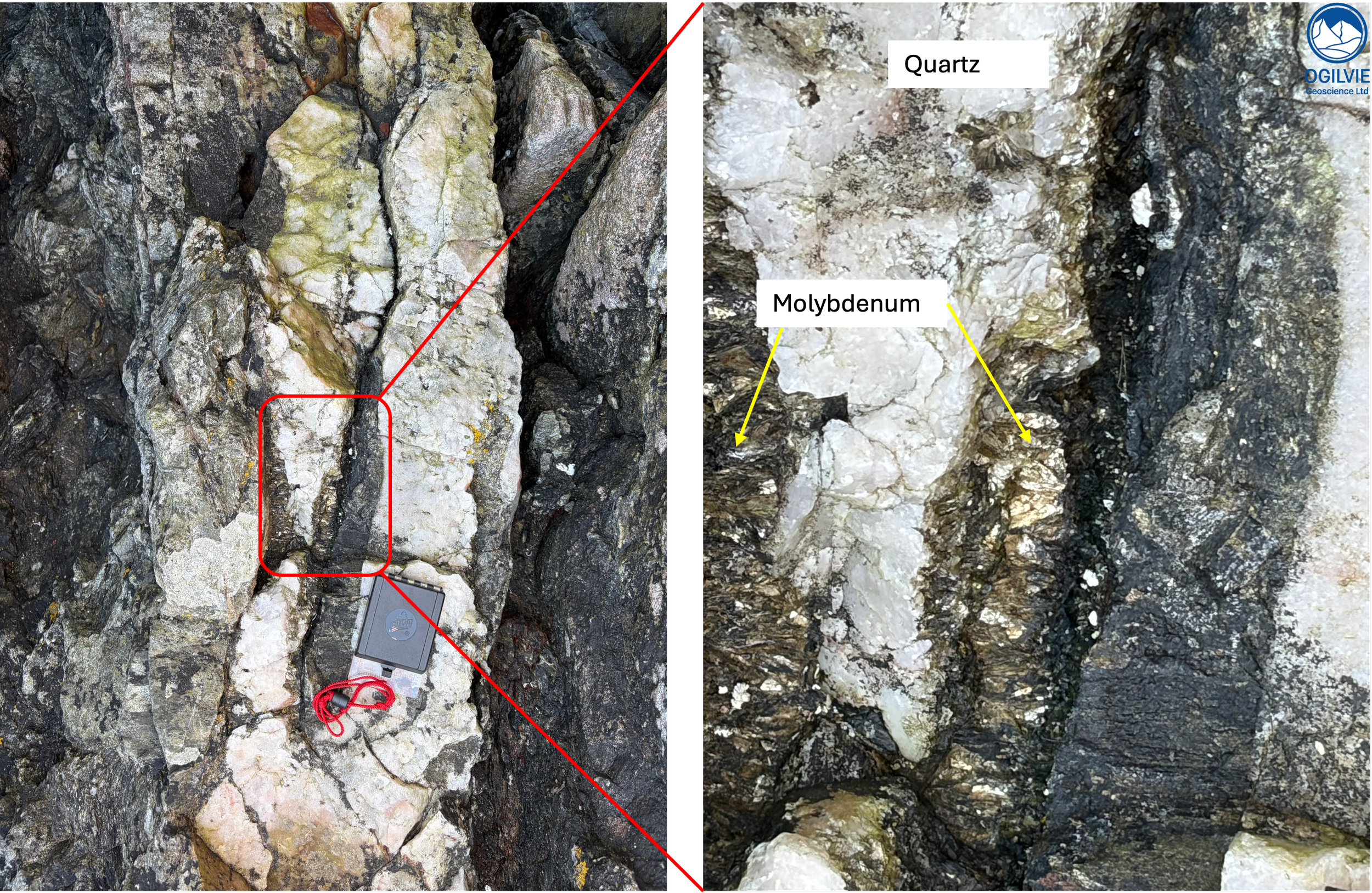
Molybdenum can be found in the thickest quartz vein in the area.
An ideal sample of molybdenum (isolated from any bearing rock/vein) is shown below from wikipedia.
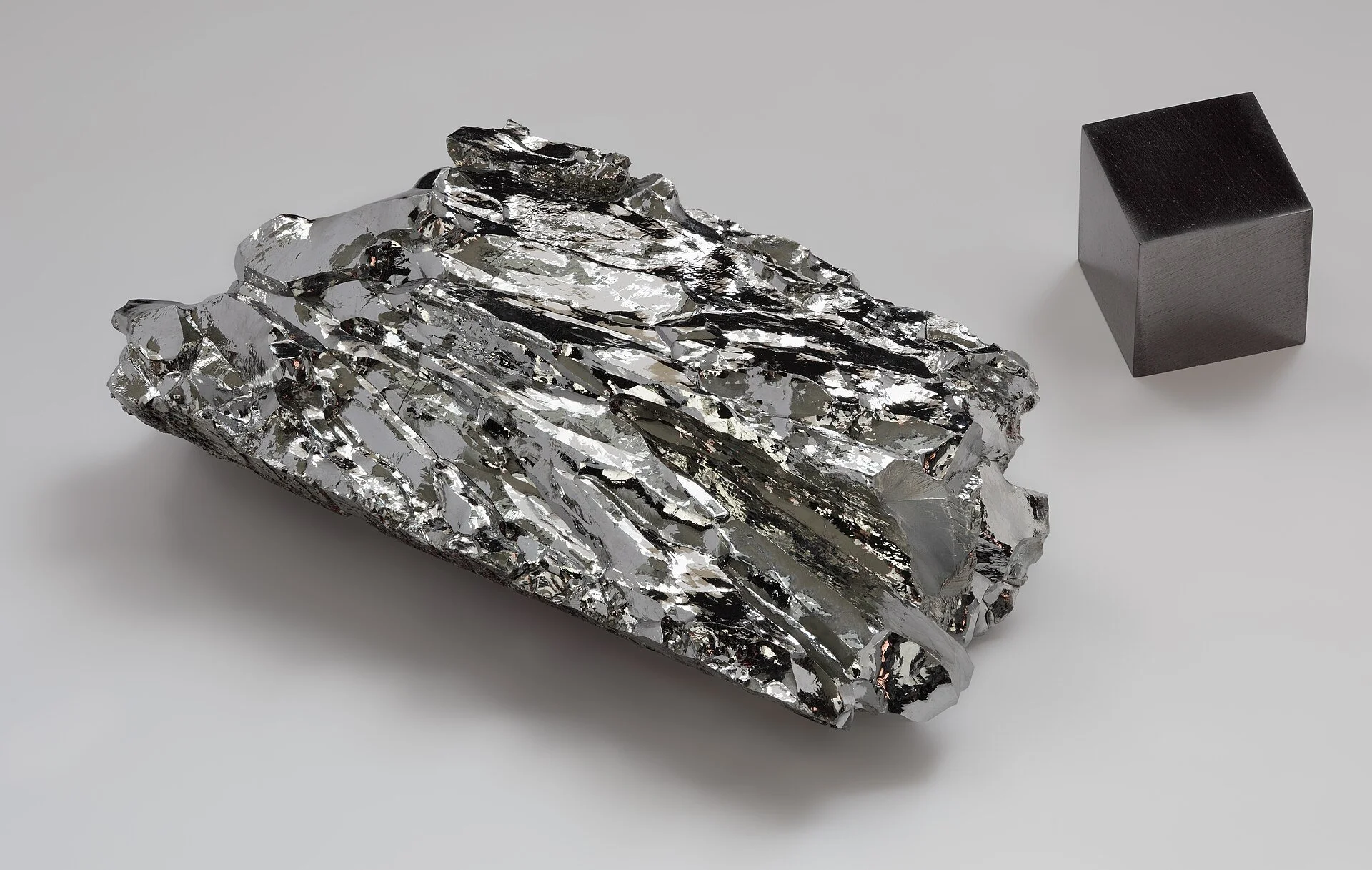
Nice example of molybdenum from https://en.wikipedia.org/wiki/Molybdenum
Rice, C.M, Mark, D.F. Geology of the Souter Head subvolcanic complex, Aberdeenshire, Scotland: an ordovician granite-related Mo - (Bi-As-Au) system. Earth & Environmental Science Transactions of the Royal Society of Edinburgh, 111, 77 - 94, 2020.
Mark, D.F, Rice, C.M, Hole, M, Condon, D. Multi-chronometer dating of the Souter Head complex: rapid exhumation terminates the Grampian Event of the Caledonian Orogeny. Environmental Science Transactions of the Royal Society of Edinburgh, 111, 95-108, 2020.