
Arbroath Unconformity in Observers book of Geology
Observers Book of Geology
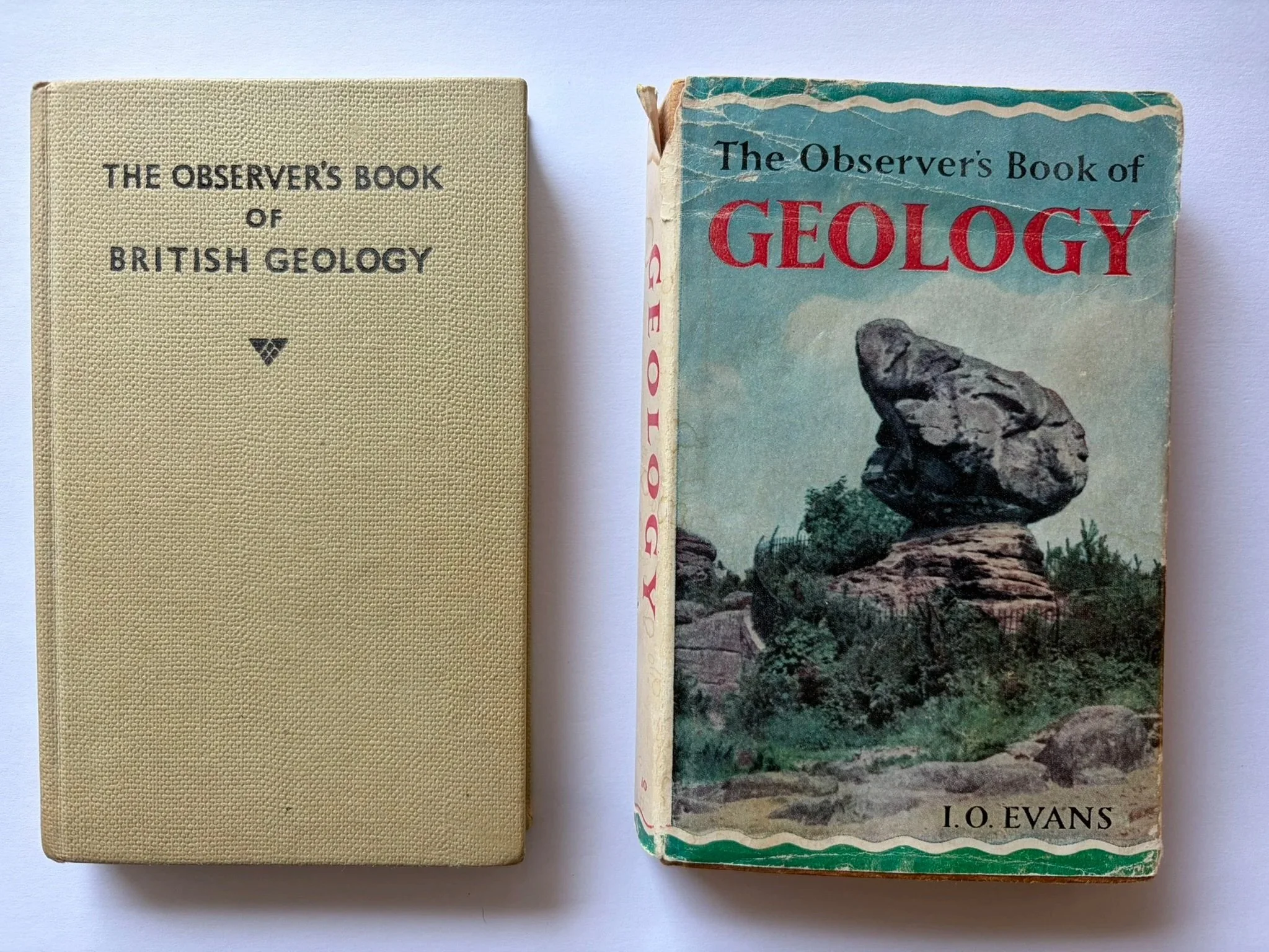
Observer’s book of Geology (with dust cover) and earlier version “British Geology”
This rather old series of pocket sized books covered a range of topics from astronomy to architecture to geology. I recently learnt that the Observers book of Geology 1st published in the 1960s had an earlier version (of the same content) called the Observer’s book of British Geology. This was 1st published in 1949. The content covers some fairly classic sites of Scottish Geology, including volcanic necks at Arthur's Seat, Edinburgh and basalt columns on the Isle of Staffa.
I was interested to see a photograph and some text around the Unconformity between the Upper and Lower Old Red Sandstone in Arbroath on Scotland’s east coast. A most impressive feature of Scotland’s geology but rarely written about in textbooks of Scotland’s Geology.
Here’s the list of Scottish plates…
Unconformity Conglomerate resting on Sandstone near Arbroath
Weathering of a Sill, North Queensferry, Fife
Dyke, Ardnacross Bay, Near Campbeltown
A loch in the Isle of Mull
Hanging wall, Glen Nevis, Inverness-shire
Fossil Forest, Victoria park, Glasgow
Basalt columns, Isle of Staffa
Volcanic necks, Arthur Seat, Edinburgh
Cleavage of slate, Easdale Island, Argyll
Glacially striated slate bed, Island of Islay
The Unconformity at Arbroath
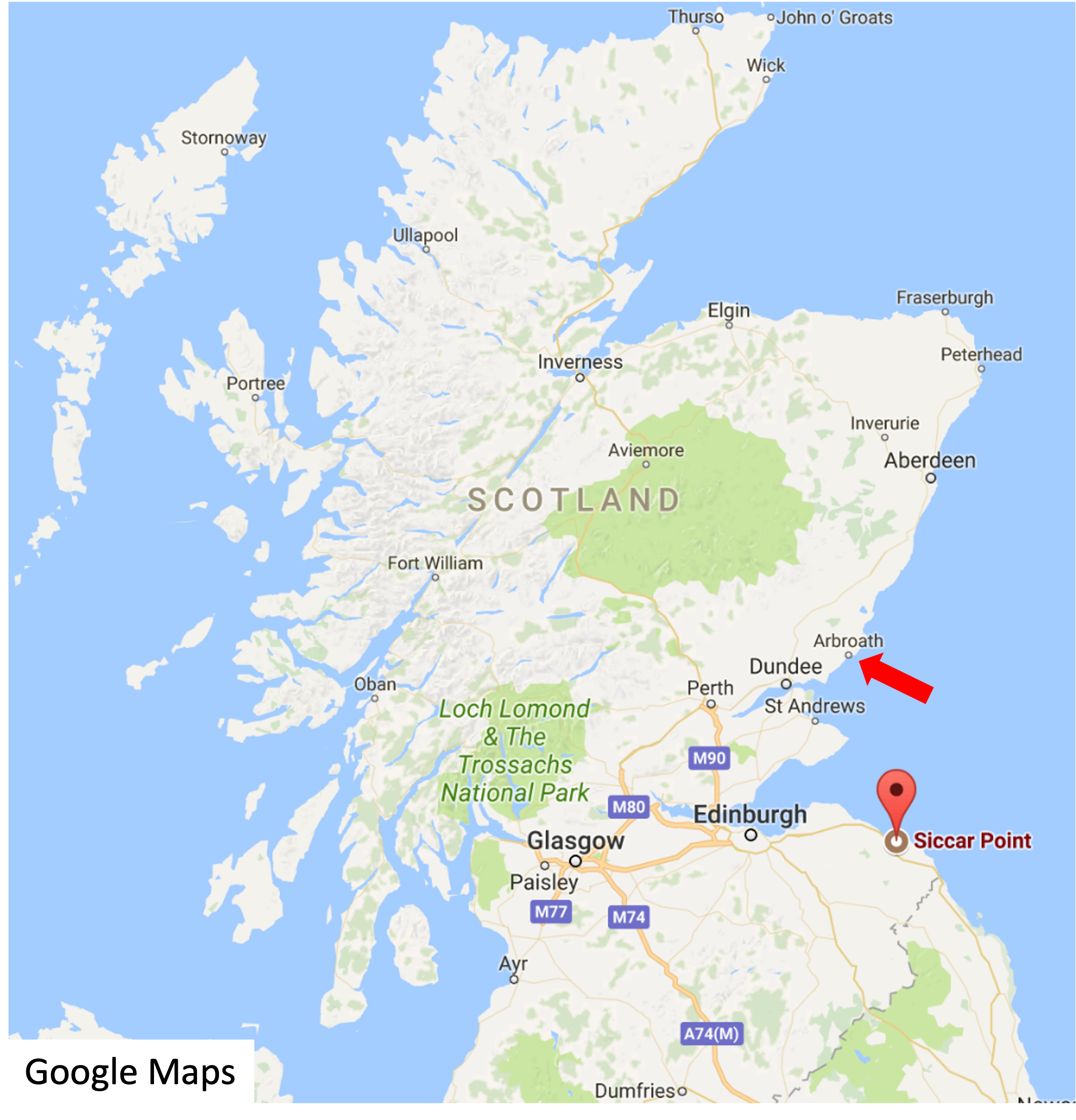
Map of Scotland showing the location of Arbroath and Siccar Point
It’s no surprise that nice examples of unconformities are covered in the Observers book (p 107) as these are key surfaces in sedimentary basins which represent gaps in time. They are periods of erosion during which sediment was not deposited.
However, I was surprised to see a photograph of the unconformity between the Upper and Lower ORS at Arbroath and not the more famous unconformity at Siccar Point. Not because the Arbroath unconformity is less spectacular - just less well known as Siccar is the site of one of Hutton’s unconformities and essentially the birthplace of modern geology - which has recently had a new trail and information centre created.
The Arbroath unconformity is at the far end of the esplanade at Whiting Ness (NO 659 411), next to the car park. Best view of the outcrop is from the foreshore but take care as the rocks are slippery. The red colour of the rocks is due to oxidation, the climate being hot and dry (desert).
The unconformity separates the pebbly Upper Devonian Sandstones from the Lower Devonian Sandstones; the Lower Devonian was uplifted, eroded and subjected to compressional activity during the Middle Devonian - to create the tilt that we see below.
Large structures such as the Sidlaw Hills (anticline) and Strathmore Syncline just South of the Highland Boundary Fault formed during the Middle Devonian. Sediment deposition in the Midland Valley resumed in the Upper Devonian by way of slow moving braided or meandering rivers. Along the Arbroath coastline, the Upper Devonian sands are very pebbly and conglomeratic in character.
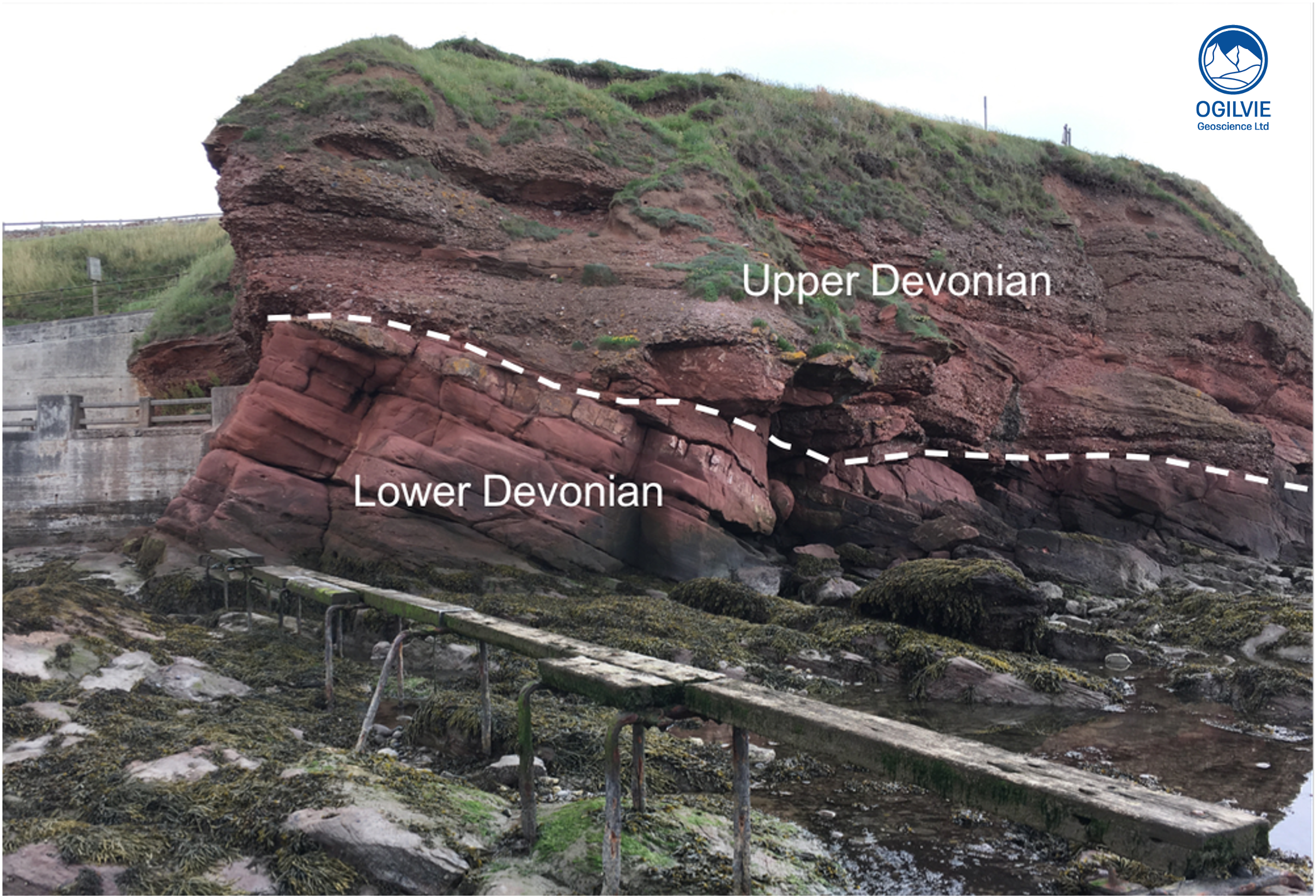
Angular unconformity (dashed white line) between near horizontal Upper Devonian (pebbly) sandstones and seaward dipping Lower Devonian Sandstones, Whiting Ness, Arbroath