
Pleasant circular walk, Pitlochry Dam, Scotland.
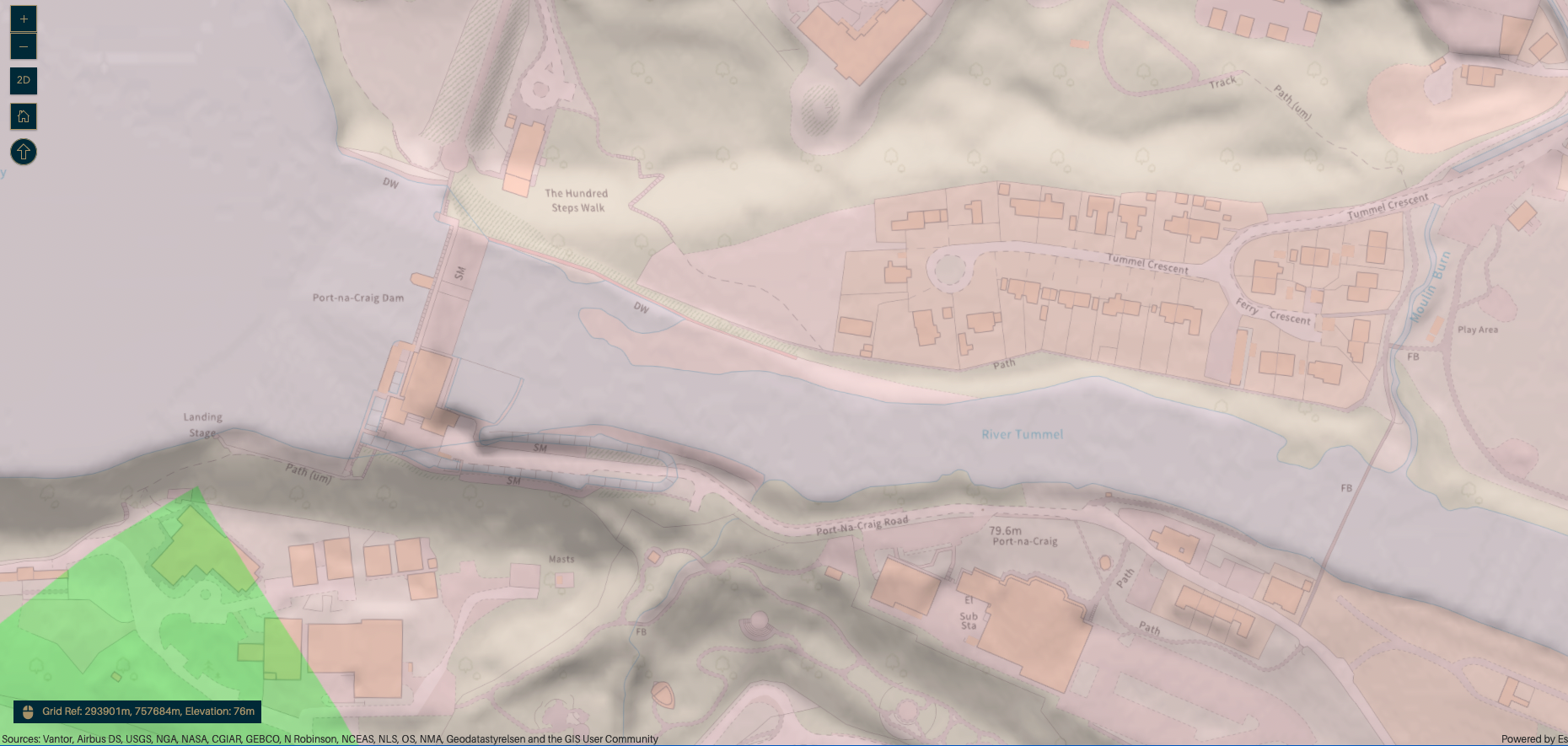
Map with geological shading from BGS showing the dam dividing the loch and river. The footbridge can be seen on the right hand side near Pitlochry festival theatre.
Where about in Scotland are we ?
In northern Perthshire, just off the A9 in the town of Pitlochry. Follow signs and park at Pitlochry festival theatre. This circular route along and across the River Tummel (the River Tay’s largest tributary) takes around 30 minutes by foot.
The Pitlochry Dam
In the 1940s a dam (the Pitlochry Dam) was built across the River Tummel (creating Loch Faskally) at Pitlochry to provide hydro-electric power for the area. According to the information board, it produces enough power for around 15 000 homes. It is a very impressive structure built on solid metamorphic rock foundations.
There a fish ladder to allow spawning fish to migrate upstream - it looks like a set of wide steps on the lower left photo. There are viewing screens and fish counters off the path beside the ladder. You can walk across the dam (lower right photo) and look into some of the workings of the dam. There are some information boards on the other side of the dam on your way to the town centre (via the railway station).
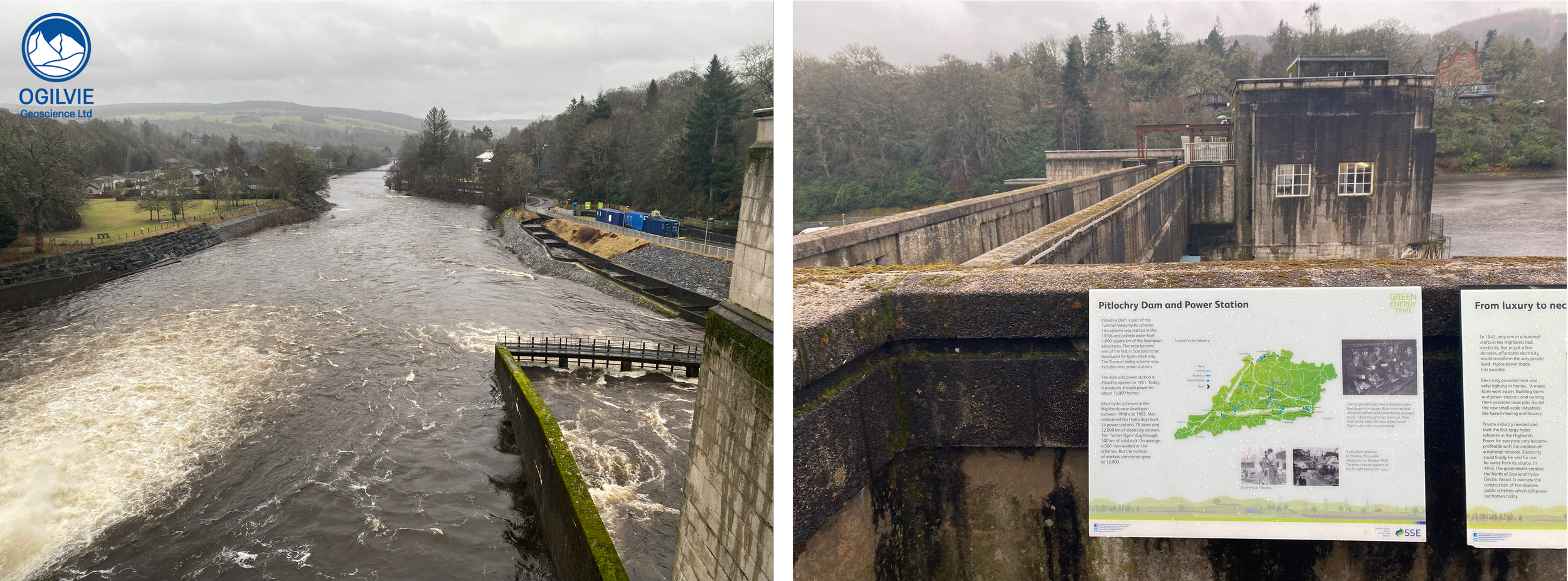
View along River Tummel from the top of the Pitlochry dam. The footbridge is in the distance and dam information boards on the right.
Rock outcrops in the River Tummel
On my way back to the car park at the theatre, I crossed the Tummel by the port-na Craig Footbridge - it is a suspension bridge and was built in 1913 to replace a ferry crossing.
There are some exposures of gently dipping rocks when looking down towards the dam and Loch Faskally. The ferry was secured onto these rocks with ropes before the footbridge was built. These are clearly bedded and could well be sedimentary rocks but it is likely that they are metamorphic rocks of the Southern Highlands Group as shaded on the BGS map. The rocks were sedimentary in origin (possibly turbidites deposited in deep water) and we can see the original bedding. These metamorphic rocks are called either semi-pelites or psammites. They are from the Cambrian period, their minimum age being around 500 millions years old.
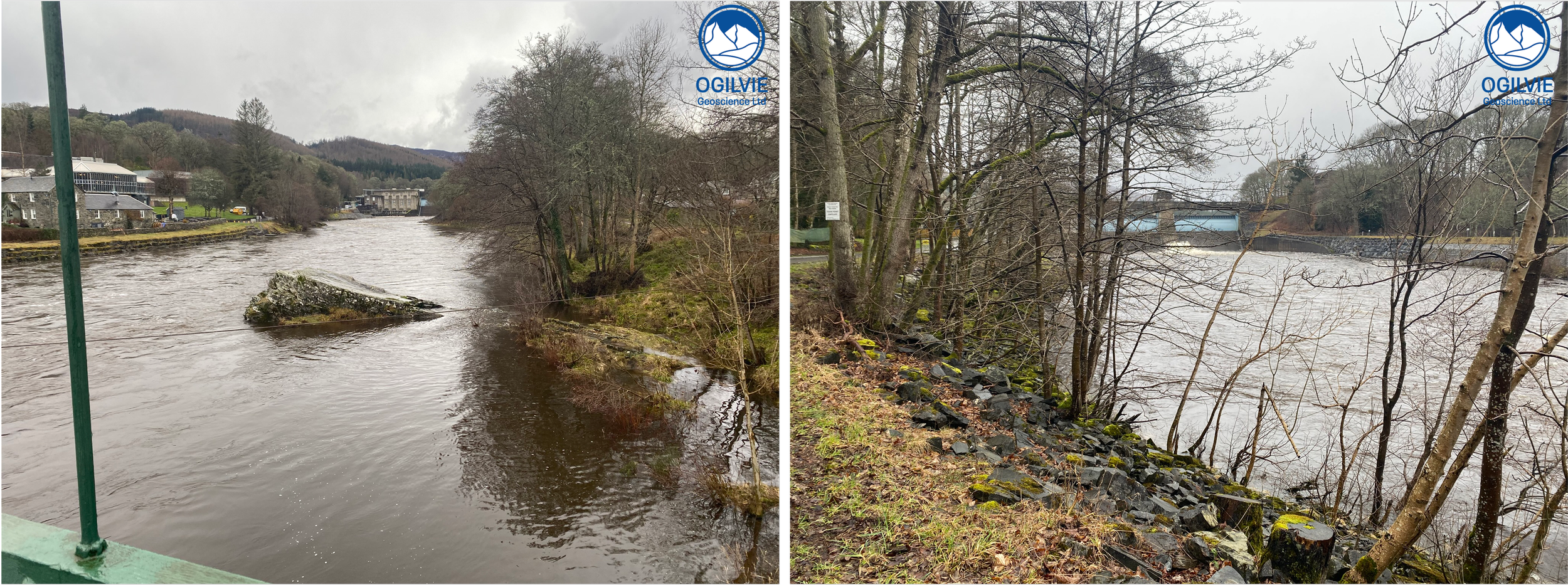
Views towards the dam - on the left are the dipping rocks of the Southern Highlands Group and a view from the bank on the right.