
“Field-trip” to Aberdeen Art Gallery
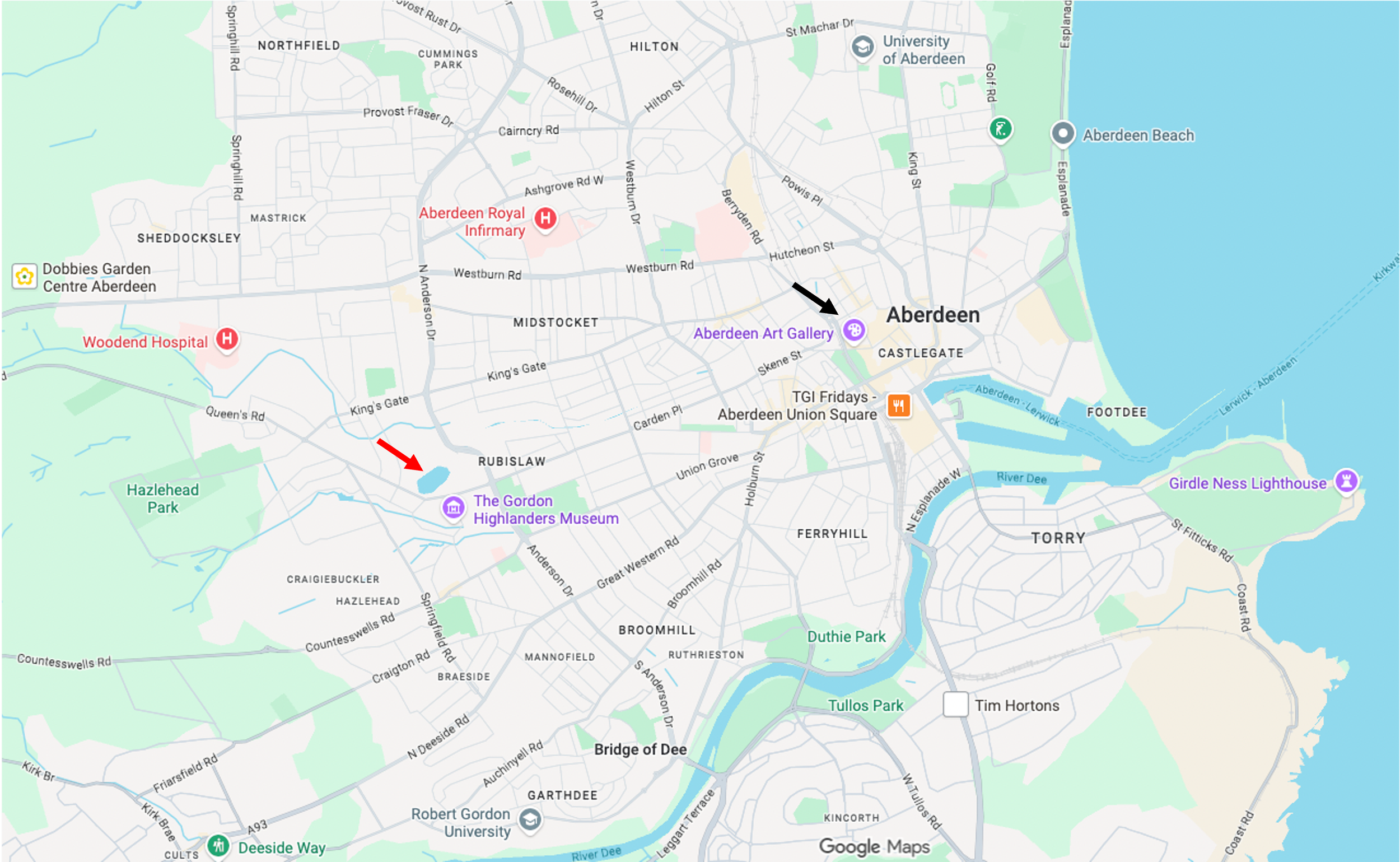
City of Aberdeen. Location of (water-filled) Rubislaw Quarry by red arrow and Aberdeen Art Gallery (black arrow)
The Granite City
Aberdeen is pretty much made of granite. Most of it came from Rubislaw Quarry close to the centre of the city - so named the Rubislaw Granite which is characteristically whitish-grey in colour with black crystals of biotite mica. It also contains plagioclase and microcline feldspars together with muscovite mica and of course quartz.
The granite was formed around 470 Ma (Ordovician) during the Grampian Orogeny at extremely high temperatures.
Rubislaw quarry is now abandoned and filled with water and best views of it are from above ground level from surrounding buildings. I was lucky enough to get some views of it when working for Conoco Phillips at their Rubislaw buildings.
Kemnay granite looks quite similar to the Rubislaw granite and comes from the still active Kemnay quarry to the north of the city.
https://britgeoheritage.blogspot.com/2014/02/kemnay-quarries-working-granite-quarry.html
Granite at Aberdeen Art Gallery
Here’s an easy fieldtrip that doesn’t require any helmets or risk assessments ! The main hall (courtyard) in the ground floor of the art gallery has a number of “granite” columns from different parts of the country. Of course, you’ll find the Rubislaw and Kemnay granites there but I was amazed by the sheer variety of “granites”.
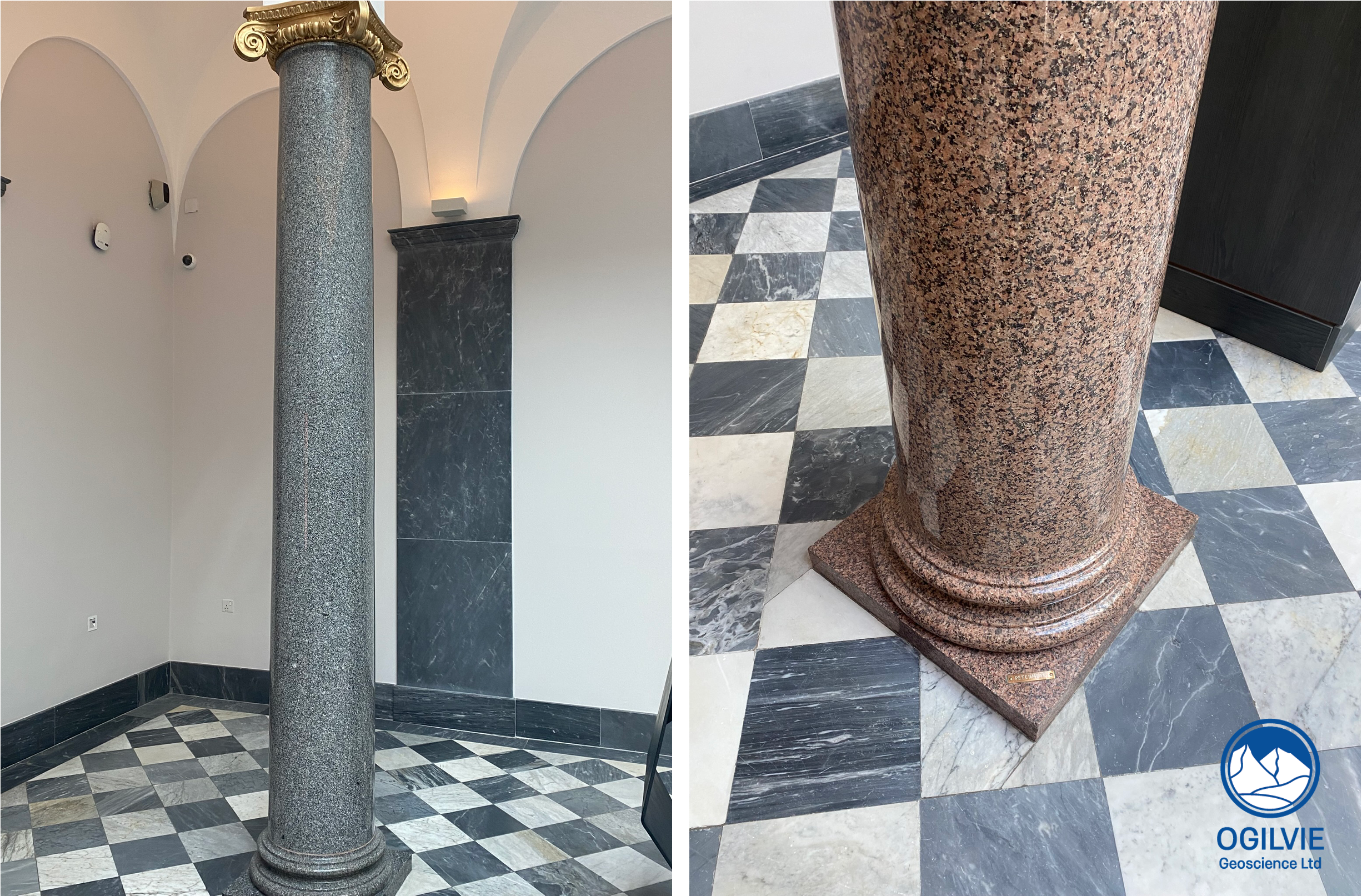
Sculptured columns in Aberdeen Art Gallery. Rubislaw granite is on the left and Peterhead granite on the right.
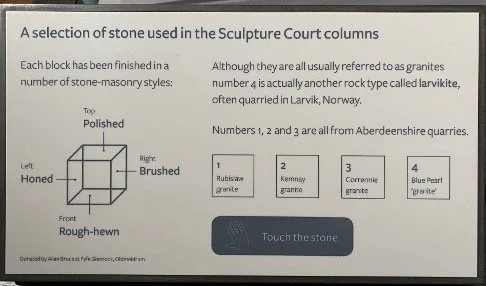
I put granites in inverted commas as stonemasons have tended to call most rocks that they are working with “granite” - for example the Blue Pearl granite (# 4 on the display) is not a granite but a larvikite from a quarry in Larvik in Norway. Anyway, I understand why it was (and is) convenient to call these granites and prefix them with a colour.
In one of the rooms next to the courtyard (with the impressive columns) is a display of 4 main types of “granites” used in the sculpture stone columns. There is also some info on what the various stone-masonary finishes are (opposite).
The Rubislaw granite (#1 below) is a bit darker than the Kemnay granite (#2 below) owing to darker minerals such as biotite. The dominant feldspars here are plagioclase & microcline which together with quartz gives the rock its greyish white colour. The pink granite, often called the Peterhead granite (#3) in Aberdeen has a higher amount of K-feldspar including orthoclase. Less of this type of granite has been used (cf. to Rubislaw granite) for building material in the city, presumably due to transport costs from much further afield than Rubislaw quarry.
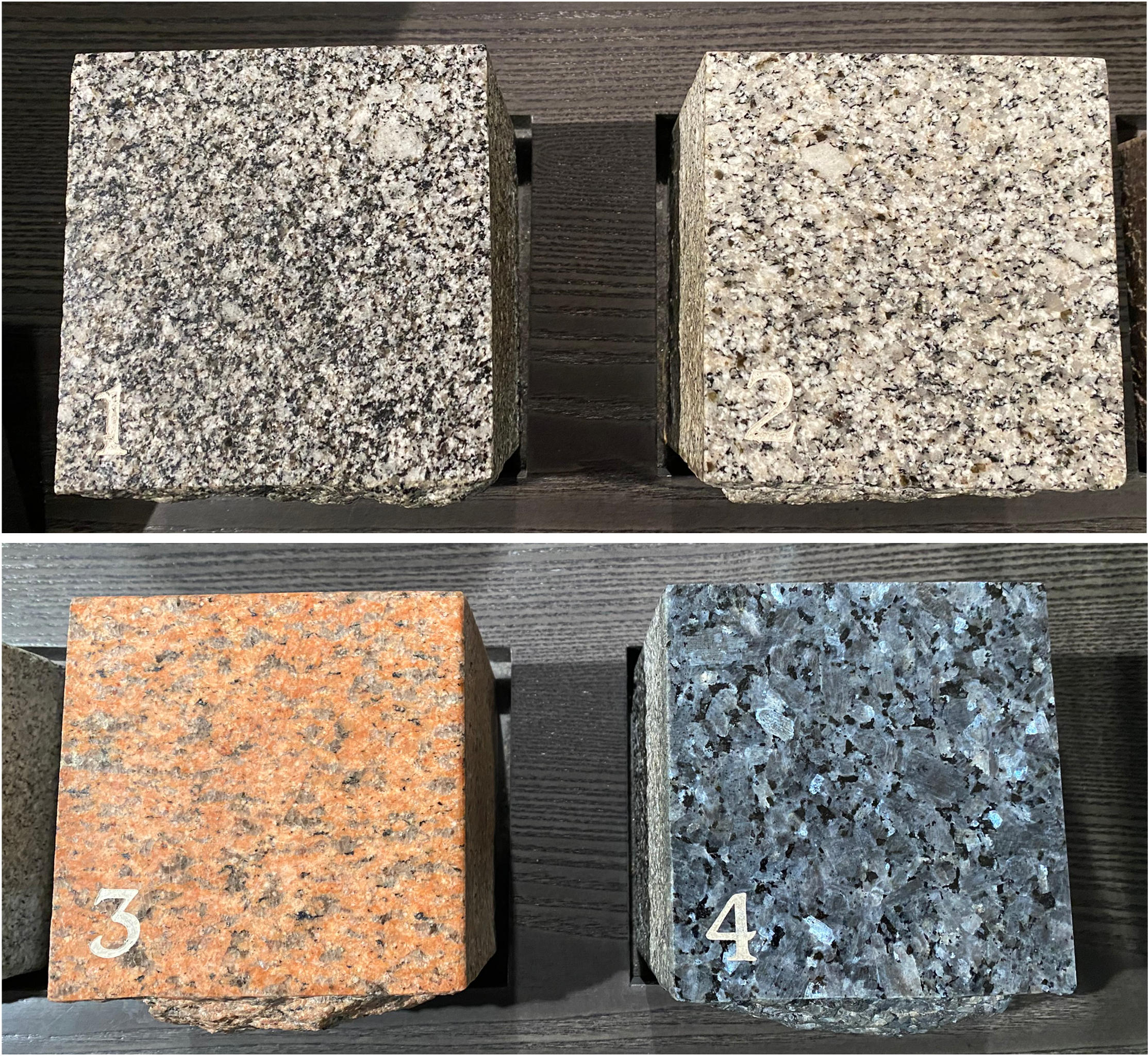
Different “granites” used in the sculpture stone columns in Aberdeen Art Museum - see the key above for a description
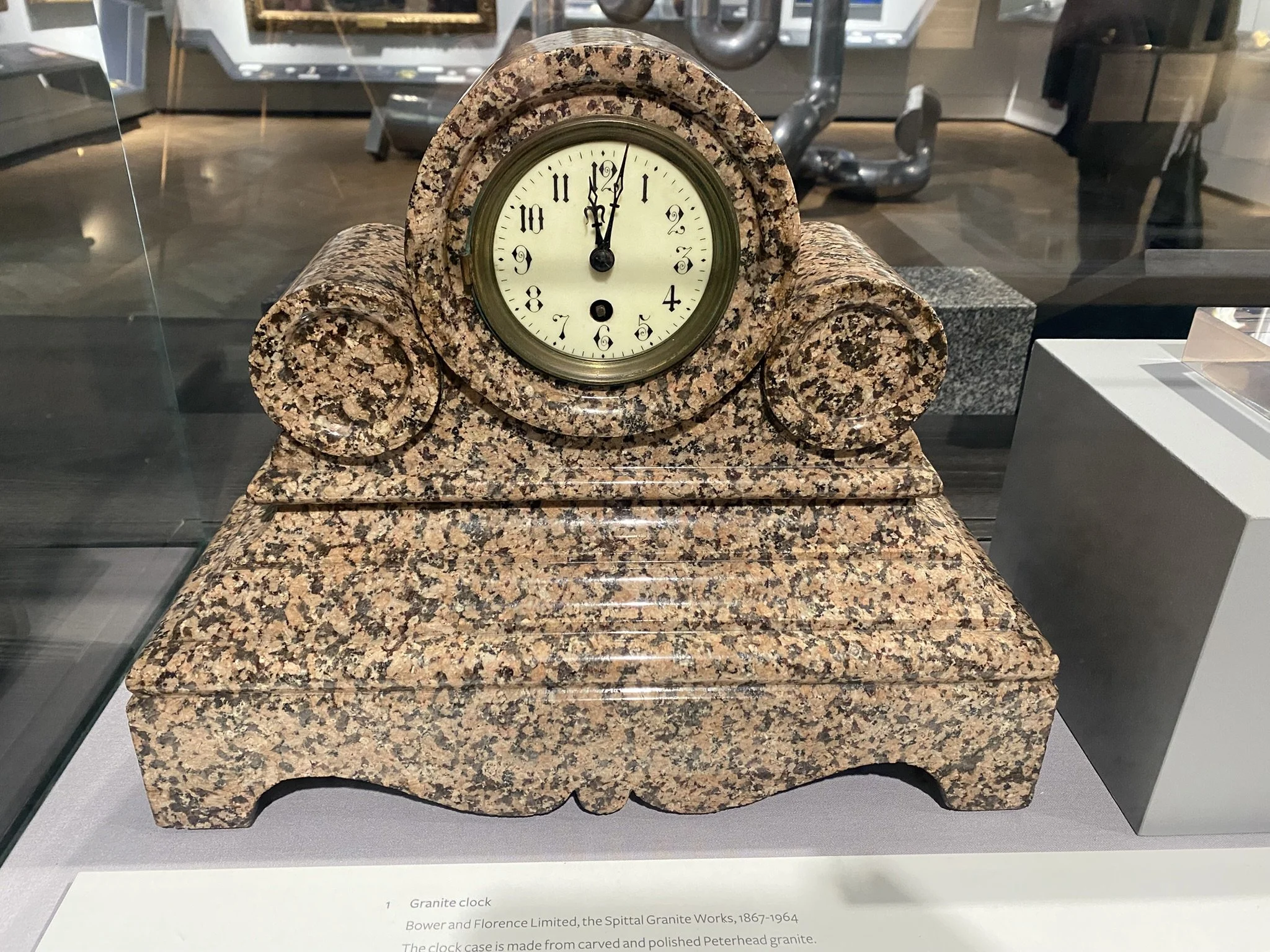
Granite clock - everyone should have one !
Virtual microscope